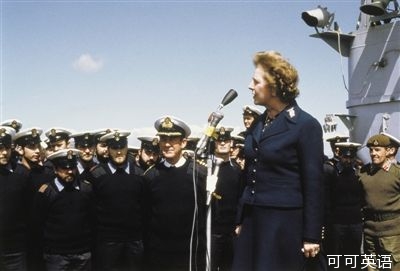
Falklands War
福岛战争
By late 1981 her approval rating had fallen to 25%, the lowest recorded for any prime minister until that time, but the economic corner had been turned.
1981年底,撒切尔的支持率跌至25%。这是有史以来英国首相的最低支持率。然而,英国的经济却呈现出截然相反的趋势。
In early 1982 the economy began to recover and, with it, the prime minister's standing among the electorate.
1982年初,英国经济开始复苏。撒切尔在选民心中的地位也随之上升。
Her popularity received its biggest boost in April 1982 with her decisive response to the Argentine invasion of the Falkland Islands.
1982年4月,撒切尔对阿根廷进入福克兰群岛做出了决定性回应,因此声望空前。
The prime minister immediately despatched a naval task force and the islands were retaken on 14 June when the Argentine forces surrendered.
撒切尔立即向福岛派出了海军部队。6月14日,阿根廷投降,英国重新控制了福克兰群岛。
Victory in the Falklands, together with disarray in the Labour Party, now led by Michael Foot, ensured a Conservative landslide in the 1983 election.
当时的工党在迈克尔•富特的领导下混乱不堪,加上福岛战争的胜利,使保守党在1983年的大选中获得了压倒性的大胜。
The following spring the National Union of Mineworkers called a nationwide strike, despite the failure of their firebrand president, Arthur Scargill, to ballot his members.
尽管全国矿工联合会主席亚瑟•斯吉卡尔没有在会员中进行投票,工会仍然决定在1984年春天举行全国性罢工。
Margaret Thatcher was determined not to falter. Unlike the situation Edward Heath faced in 1973, the government had built up substantial stocks of coal at power stations in advance of the industrial action.
撒切尔没有退缩。有别于1973年时的希思政府,她对这次罢工早已做好充足准备,储备了大量的煤,所以罢工并未对发电厂的供应构成影响。