BAMAKO, Mali — The cash filled three suitcases: 5 million euros.
马里巴马科——三个手提箱里装满了500万欧元。
The German official charged with delivering this cargo arrived here aboard a nearly empty military plane and was whisked away to a secret meeting with the president of Mali, who had offered Europe a face-saving solution to a vexing problem.
负责送钱的德国官员乘坐空荡荡的军机抵达巴马科,然后匆匆奔赴与马里总统的秘密会议。在这个棘手问题上,马里总统为欧洲提供了一个保全颜面的解决方法。
Officially, Germany had budgeted the money as humanitarian aid for the poor, landlocked nation of Mali.
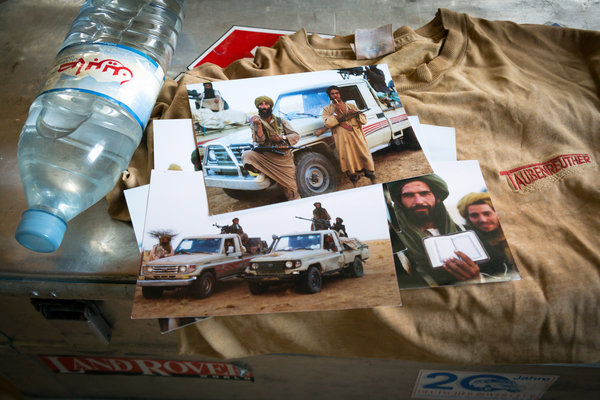
表面上,德国打算将这笔钱划归为人道主义援助,帮助内陆国家马里的穷人。瑞典人伊克勒保留的2003年遭绑架54天期间的物品。他在德国生活,在阿尔及利亚进行探险之旅时被圣战分子绑架。
Gordon Welters for The New York Times
瑞典人伊克勒保留的2003年遭绑架54天期间的物品。他在德国生活,在阿尔及利亚进行探险之旅时被圣战分子绑架。
In truth, all sides understood that the cash was bound for an obscure group of Islamic extremists who were holding 32 European hostages, according to six senior diplomats directly involved in the exchange.
事实上,据六名直接参与交换人质的高级外交官透露,各方都知道这些钱是给一个鲜为人知的伊斯兰极端组织的。他们控制着32名欧洲人质。
The suitcases were loaded onto pickup trucks and driven hundreds of miles north into the Sahara, where the bearded fighters, who would soon become an official arm of Al Qaeda, counted the money on a blanket thrown on the sand. The 2003 episode was a learning experience for both sides. Eleven years later, the handoff in Bamako has become a well-rehearsed ritual, one of dozens of such transactions repeated all over the world.
小货车运载着三个手提箱,向北行驶数百英里到撒哈拉沙漠。一群蓄着胡须的武装分子将毯子扔到沙地上,并在上面数钱。不久之后,他们就成了基地组织(Al Qaeda)的正式分支。2003年的事件对于双方来说都是一次学习的经历。11年后,巴马科的这种交换活动已经成了一种轻车熟路的仪式,是世界范围内上演的几十桩类似交易中的一个。
Kidnapping Europeans for ransom has become a global business for Al Qaeda, bankrolling its operations across the globe.
为了获得赎金绑架欧洲人已经成为基地组织的一项全球业务,为其在世界各地的行动提供资金。
While European governments deny paying ransoms, an investigation by The New York Times found that Al Qaeda and its direct affiliates have taken in at least $125 million in revenue from kidnappings since 2008, of which $66 million was paid just in the past year.
虽然欧洲国家的政府否认支付赎金,但《纽约时报》的调查发现,自2008年起,基地组织及其直属分支机构通过绑架至少获得了1.25亿美元(约合7.7亿元人民币)的收入,其中单是去年就有6600万美元进账。
In various news releases and statements, the United States Treasury Department has cited ransom amounts that, taken together, put the total at around $165 million over the same period.
将各种新闻稿和声明中美国财政部援引的数据合起来,这一时期的赎金总额约为1.65亿美元。
These payments were made almost exclusively by European governments, who funnel the money through a network of proxies, sometimes masking it as development aid, according to interviews conducted for this article with former hostages, negotiators, diplomats and government officials in 10 countries in Europe, Africa and the Middle East. The inner workings of the kidnapping business were also revealed in thousands of pages of internal Qaeda documents found by this reporter while on assignment for The Associated Press in northern Mali last year.
我们采访了来自欧洲、非洲和中东地区10个国家的前人质、谈判者、外交官及政府官员。据他们透露,这些赎金几乎都是由欧洲国家的政府通过代理人网络支付的,有时会以发展援助款项的名义进行掩饰。去年在马里北部为美联社(The Associated Press)工作时,记者找到了基地组织的内部相关文件。数千页的资料披露了绑架活动的内部运作情况。
In its early years Al Qaeda received most of its money from deep-pocketed donors, but counterterrorism officials now believe the group finances the bulk of its recruitment, training and arms purchases from ransoms paid to free Europeans.
基地组织早期接收的大部分资金来自慷慨的捐助者,但是反恐官员现在认为,该组织招募、培训成员及购买武器所需的大部分费用,如今源自释放欧洲人质获得的赎金。
Put more bluntly, Europe has become an inadvertent underwriter of Al Qaeda.
说白了,欧洲无意中成为了基地组织的资助方。
The foreign ministries of France, Switzerland, Austria, Italy and Germany denied in emails or telephone interviews that they had paid the terrorists. “The French authorities have repeatedly stated that France does not pay ransoms,” said Vincent Floreani, deputy director of communication for France's Ministry of Foreign Affairs.
法国、瑞士、奥地利、意大利及德国的外交部均在邮件或电话采访中否认曾付钱给恐怖分子。法国外交部负责通讯联络的副主管樊尚·弗洛雷亚尼 (Vincent Floreani)表示,“法国政府一再重申没有缴付赎金。”
Several senior diplomats involved in past negotiations have described the decision to ransom their citizens as an agonizing calculation: accede to the terrorists'demand, or allow innocent people to be killed, often in a gruesome, public way?
几名曾参与谈判的高级外交官称,以赎金来拯救公民的决定是一个极其痛苦的考量:向恐怖分子屈服,或者任由他们杀害无辜民众,而且往往是以恐怖而公开的方式。
Yet the fact that Europe and its intermediaries continue to pay has set off a vicious cycle.
然而,欧洲及其中间人持续缴纳赎金的做法引发了恶性循环。
"Kidnapping for ransom has become today's most significant source of terrorist financing," said David S. Cohen, the Treasury Department's under secretary for terrorism and financial intelligence, in a 2012 speech. "Each transaction encourages another transaction."
“通过绑架赚取赎金已经成为恐怖分子时下最主要的经费来源,”美国财政部负责反恐与金融情报的副部长戴维·S·科恩(David S. Cohen)在2012年发表讲话时说。“每一桩交易都催生了另一桩交易。”
And business is booming: While in 2003 the kidnappers received around $200,000 per hostage, now they are netting up to $10 million, money that the second in command of Al Qaeda's central leadership recently described as accounting for as much as half of his operating revenue.
这项业务正在迅速发展:2003年,绑匪从每名人质身上赚取约20万美元,现在的要价则可高达1000万美元。基地组织核心领导层的二把手最近表示,赎金收入占了运营进项的一半。
"Kidnapping hostages is an easy spoil," wrote Nasser al-Wuhayshi, the leader of Al Qaeda in the Arabian Peninsula, "which I may describe as a profitable trade and a precious treasure."
“绑架人质很容易得到奖赏,”阿拉伯半岛基地组织(Al Qaeda in the Arabian Peninsula)的头目纳赛尔·乌海什(Nasser al-Wuhayshi)写道。“我得说这是笔利润可观的生意,也是珍贵的宝藏。”
The stream of income generated is so significant that internal documents show that as long as five years ago, Al Qaeda's central command in Pakistan was overseeing negotiations for hostages grabbed as far afield as Africa. Moreover, the accounts of survivors held thousands of miles apart show that the three main affiliates of the terrorist group — Al Qaeda in the Islamic Maghreb, in northern Africa; Al Qaeda in the Arabian Peninsula, in Yemen; and the Shabab, in Somalia — are coordinating their efforts, and abiding by a common kidnapping protocol.
收入源源不断,规模惊人,内部文件显示,早在五年前,基地组织设在巴基斯坦的中央指挥部就在人质的谈判工作上发号施令,涉及的人质最远在非洲遭到绑架。此外,根据关押地相隔数千英里的不同幸存者的描述,该恐怖组织的三大分支——位于北非的伊斯兰马格里布基地组织(Al Qaeda in the Islamic Maghreb)、位于也门的阿拉伯半岛基地组织以及位于索马里的青年党(Shabab)——共同合作,遵守通用的绑架协议。
To minimize the risk to their fighters, the terror affiliates have outsourced the seizing of hostages to criminal groups who work on commission. Negotiators take a reported 10 percent of the ransom, creating an incentive on both sides of the Mediterranean to increase the overall payout, according to former hostages and senior counterterrorism officials.
为了将武装分子面临的风险降至最低,这几家恐怖主义分支机构把绑票的任务外包给犯罪集团,后者抽取佣金。曾被绑架的人士和高级反恐官员透露,谈判者据称会抽取10%的赎金。这样,地中海两边均有动力来增加整体金额。
Their business plan includes a step-by-step process for negotiating, starting with long periods of silence aimed at creating panic back home. Hostages are then shown on videos begging their government to negotiate.
他们的绑架计划包括循序渐进的谈判过程,首先要长时间保持沉默,以便在相关国家引发恐慌,然后公布人质恳求本国政府谈判的录像。