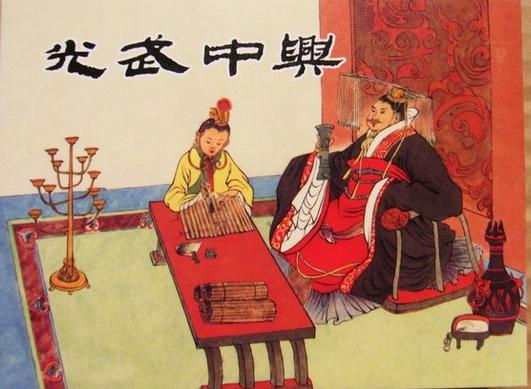
光武中兴
Emperor Guangwu Revitalizes the Han
光武帝刘秀登基后战争仍不断发生。
War continued after Liu Xiu, Emperor Guangwu, claimed the throne.
在接下来的十几年间,刘秀平定了绿林军和赤眉军以及其他的一些地方势力。
Over the next dozen years Liu Xiu wiped out the Lulin and Red-brow armies and other local forces.
国家与公元36年再次获得统一。
The country became united again in A.D.36.
刘秀是中国的帝王中极少同时具有军事和国家大事天赋的人之一。
Liu Xiu was one of the few Chinese emperors with talent for handling both military and civil affairs.
作战中就算对手的兵力比他充足,他也能够出奇制胜。
In war he was able to achieve victory using the strategy of surprise even when the enemy outnumbered his troops.
他根据人们不同的才能而不是与自己的关系派遣给他们合适的职务。
He appointed people to appropriate positions based on their different abilities, instead of their relationship with him.
例如,他任许多平民或普通士兵为大将。
For instance, he promoted many commoners and ordinary soldiers to become generals.
他还重用曾密谋杀害他大哥有牵连的朱鲔。
He even gave an important position to Zhu Wei, a man who had been involved in the conspiracy to murder his elder brother.
重新统一全国后,光武帝将更多的时间投入到了国家大事之中而不是享受着自己的美名。
After reuniting the country, Emperor Guangwu devoted most of his time attending to state affairs, rather than resting on his laurels.
据史料记载,他每日早早上朝,与他的大臣们商议大事直到太阳西下。
According to historical records, he went to the imperial court early every morning, where he would discuss important matters with his ministers until sunset.
大多数时候会议会持续到午夜时分。
Often the meetings would last until as late as midnight.
光武帝的奉献为国家增添了更多的英明决策。
Emperor Guangwu’s dedication led to the implementation of many wise policies.
比如,当采取措施加强王室的权力时,他强调要简化国家机构,裁减冗官。
For example, while taking measures to strengthen the power of the imperial family, he made a point of simplifying state organization and reducing surplus personnel.
他以身作则带头扭转西汉末期的奢靡之风。
He personally took the lead in reversing the extravagant trends of the late Western Han government.
因为自己也是长于普通人之家,他充分了解人民的疾苦,所以颁布了仁慈的法律和低廉的税收来帮助人民恢复。
Growing up among the common people, Emperor Guangwu knew their hard lot and thus promulgated lenient laws and low taxes to help the people recover.
他称这些法令为“温和执政”并因此引导东汉走向一个良好的开端。
He described such policies as “running the country with kindness” thus steering the Eastern Han toward a good beginning.
他掌权的时期因此被称为“光武中兴”。
His reign indeed came to be acclaimed as “Gangwu Revitalizing the Han.”
在他于公元前57年驾崩之前,光武帝为自己办了一个简单的葬礼,因为他认为自己“对人民无用”。
Before his death in A.D. 57, Emperor Guangwu decreed a simple funeral for himself because he had been “of little use to the people.”
在他之后,国家的人口达到了21000000,几乎是东汉开始时的两倍。
By then the population of the country had reached 21 million, almost twice the figure at the beginning of the Eastern Han.