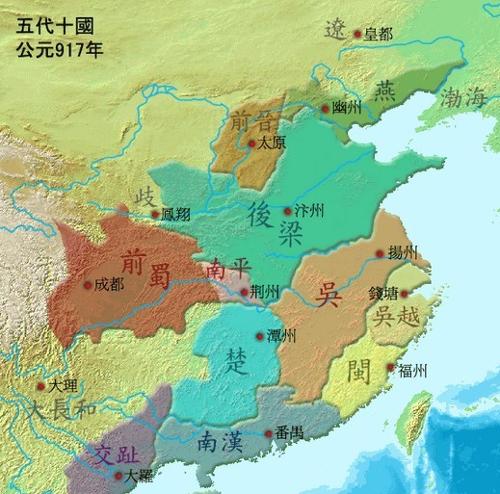
五代十国
Five Dynasties and Ten States
概况
General
中国的封建主义在之后的五代十国和宋元时期越发处于优势地位。
Chinese feudalism experienced the later period of its ascendancy during the Five Dynasties, the Song and the Yuan.
这同样是整个国由分裂的封建制度向中央集权制度过度的时期。
This was also a period of transition from separate feudal regimes to the establishment of a central authority over the whole country.
“五代”指后梁、后唐、后晋、后汉与后周。
By the Five Dynasties are meant the later Liang, the Later Tang, the Later Jin, the Later Han and the Later Zhou.
这些国家都曾建立于907到960年间的原地区。
These states had all been founded at one time or another, between 907 to 960 on China's Central Plains.
在这段时期,53年间就有13位帝王执政。
During this period there were altogether 13 emperors who ruled for a total of 53 years.
960至1279年之间是北宋和南宋时期,它们合称为宋代。
Between 960 and 1279 there were the Northern Song and the Southern Song dynasties, jointly known as the Song Dynasty.
北宋自960年开始,于1127年结束,共有七代9位皇帝。
There were 9 emperors of 7 generations during the Northern Song, covering a period from 960 to 1127.
南宋自1127年开始,于1276年结束,共有七代7位皇帝。
There were 7 emperors of 7 generations during the Southern Song, covering the period from 1127 to 1276.
元朝自1271年开始,于1368年结束,共有六代11位皇帝。
The Yuan Dynasty had 11 emperors of 6 generations between 1271 and 1368.
五代年间,还有另外的“十国”和辽国,
During the Five Dynasties, there were in addition ten small kingdoms known as the Ten States and also the state of Liao established,
他们分别是中国北方的辽国、西夏、金国和蒙古国
there were in North China the Liao, the Xixia (Western Xia) ,the Jin and the Mongol regimes and,
还有中国南部和西部的高昌、西辽、吐蕃和大理。
in the southern and western parts of the country, such kingdoms as Gaochang, Xiliao (Western Liao), Tubo and Dali.
尽管南宋的都城早在1276年就被敌方攻占,南宋军队仍与元朝抗争至1279年。
Though its capital was taken by the enemy as early as 1276, the Southern Song carried on its anti- Yuan struggle until 1279.