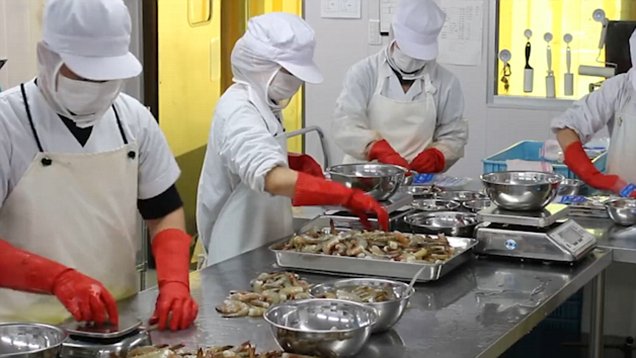
日本一家虾厂的工人什么工作都不用做,除非他们自己真想去做。
Workers at a Japanese shrimp factory don't have to do any work -- unless they feel like it.
五年前,为了提高工作效率,日本大阪的这家巴布亚新几内亚海鲜食品加工厂大幅减少了劳动力。
The Papua New Guinea Seafood processing plant in Osaka made huge cuts to its workforce in a bid to improve efficiency five years ago.
但他们并没有把员工赶走,而是取消了工作时间表的概念。
But instead of letting any employees go, they instead got rid of the concept of a schedule.
如今,员工们完全凭个人意愿来去自由,他们只需要在下班前把自己今天工作了几个小时写在一块登记板上。
Now, staff come and go as they please -- all they have to do is let managers know how many hours they worked by writing it on a board before leaving.
他们甚至不需要打电话就可以休一天假。
They can even take a day off when they choose without calling in.
有人也许认为,让员工自行掌握工作时间会导致生产效率下降或者时常人手不足。
Some may think allowing staff to manage their own hours would lead to productivity plummeting or a regular shortage of staff.
但据报道,虾厂的生产效率得以提高,管理成本也下降了接近三分之一。
But reports say productivity is up and management costs are down by almost a third.
在这五年中,只有一天是所有员工都休假了。
Over the course of five years, there was only one day when every single employee had taken the day off.
虾厂的工作包括解冻、称重、分拣、去皮、烹饪和真空封装。
Jobs at the factory include thawing, weighing, sorting, de-shelling, cooking and vacuum sealing shrimp.
这家虾厂的员工大部分都是职场妈妈,在这里工作,她们不会因为担心自己工作时孩子生病或者受伤怎么办,负担大大减轻。
Papua New Guinea's workforce is largely made up of mothers who can free themselves of the burden of worrying what would happen at work when their kids get sick or injured.