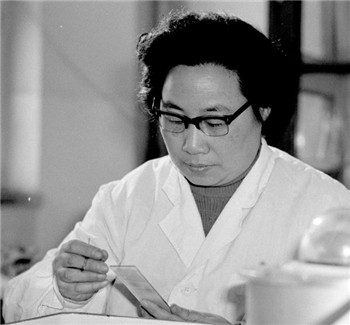
北京——在1960年代文化大革命动乱期间,中国很多受过西方教育的科学家都遭到了冷落和迫害,而政府面临着一个紧迫的科学问题需要解决。
BEIJING — During the upheaval of China’s Cultural Revolution in the 1960s, when many of the country’s Western-trained scientists were shunned and persecuted, the government had an urgent scientific problem that needed attention.
中国的重要盟友北越当时正在与美国作战,因为疟疾逐渐对氯喹药物有了抗药性,他们希望中国帮助减少北越士兵的疟疾死亡率。而且当时疟疾也在中国南方肆虐,夺去了很多人的生命。
North Vietnam, an important ally that was in the middle of war with the United States, had asked for a way to reduce the deaths of its soldiers from malaria, which had become resistant to the drug chloroquine. Malaria was also killing large numbers of people in southern China.
为了寻找解决方案,毛泽东成立了一个秘密军事项目,称为523项目,这个名字来自于它的启动日期1967年5月23日。但是,就像动乱期间的其他很多中国人一样,疟疾研究领域的顶级专家也已经作为“右派”靠边站了。
Mao Zedong set up a secret military project, Project 523 — named after its starting date, May 23, 1967 — to find a solution. But China’s top expert in the field of malaria research, like legions of other Chinese in this time of high political turmoil, had been labeled a “rightist” and shunted aside.
项目没有取得什么进展,于是政府找到了北京的中国中医研究院以及一位名不见经传的科学家屠呦呦。结果,对西医和中医均有过研究的屠呦呦从中国传统医学中找到了解决方案。
After making little headway on the problem, the government turned to the Academy of Traditional Chinese Medicine in Beijing, and to a little-known scientist, Tu Youyou, who had studied both Western and Chinese medicine — and who found the solution in traditional Chinese healing.
本周一,现年84岁的屠呦呦成为第一位获得诺贝尔奖科学奖项的中国公民。她发现的青蒿素现在已经是标准的抗疟治疗方案的一部分。屠呦呦与其他两名研制抗寄生虫药的科学家一起,分享了今年的诺贝尔生理学或医学奖。
Dr. Tu, 84, on Monday became the first citizen of the People’s Republic of China to win a Nobel Prize in the sciences, for discovering artemisinin, a drug that is now part of standard antimalarial regimens. She shared the Nobel for medicine or physiology with two scientists who also developed antiparasitic drugs.
屠呦呦通过她所在的中国中医科学院中药研究所,发表了一份关于青蒿素与传统中医药价值的获奖感言。
Dr. Tu, through the Institute of Chinese Materia Medica at the Academy of Chinese Medical Sciences where she works, issued a statement about the value of artemisinin and traditional Chinese medicine.
“青蒿素是传统中医药送给世界人民的礼物,”声明说。
“Artemisinin is a gift for the world’s people from traditional Chinese medicine,” the statement said.
之前已经有四名出生在中国大陆的华裔科学家获得过诺贝尔物理学奖,但都是他们在西方开创事业之后。中国政府一直希望本土有人获得诺贝尔科学奖,认为这可以提升其声誉,是对其教育体系质量的认可。
Four Chinese scientists born in mainland China have been awarded the Nobel in physics, but only after making their careers in the West. The Chinese government has long wanted a Nobel in the sciences for the sake of prestige and as a confirmation of the quality of its education system.
中国政府和官方新闻媒体庆祝屠呦呦获得了诺贝尔奖,认为这体现了中国科研实力的提升,也证明了中国传统医学的价值。但是一些科学家和评论人士也表示,迄今为止,中国科研体制对屠呦呦的态度一直很冷淡。
The Chinese government and state-run news media celebrated Dr. Tu’s prize as an acknowledgment of the rising strength of Chinese science as well as a vindication of the value of traditional Chinese medicine. But some scientists and commentators also said that until now, China’s scientific establishment had treated Dr. Tu somewhat dismissively.
李克强总理说,屠呦呦获得诺贝尔奖“是中国科技繁荣进步的体现,是中医药对人类健康事业作出巨大贡献的体现”。
Prime Minister Li Keqiang said that Dr. Tu’s Nobel “was an expression of the prosperity and progress of Chinese science, and of the huge contribution that Chinese traditional medicine and pharmacy has made to the health of humankind.”
不过也有评论人士指出,屠呦呦之所以未能成为中国科学家最高荣誉机构的院士,显然是因为她缺乏外国教育背景,也没有博士学位。
But Dr. Tu had been denied a place as an academician in China’s highest honorary body for scientists, apparently because of her lack of foreign training and a doctoral degree, other commentators noted.
“我觉得借由屠呦呦的获奖,还应该对中国的科技工作做更深的思考!”北京的教授王元丰在网上评论说。“中国科技工作的体制和机制还存在不少问题。”
“I think that Tu Youyou’s prize should lead to deeper reflection about China’s scientific efforts,” Wang Yuanfeng, a professor in Beijing said in an online commentary. “There are many problems in the institutions and mechanisms of scientific work in China.”
在参与523项目之初,当时39岁的屠呦呦被派到中国最南端的海南岛,亲眼看到了这种疾病给当地居民带来的痛苦。她的丈夫在文革期间遭到迫害,她把4岁的女儿送到了托儿所。在2011年接受《新科学家》(New Scientist)采访时,她说那次海南之行是历时10年的工作的开始。
At the start of her research for Project 523, Dr. Tu, then 39, was sent to Hainan Island, in the southernmost region of China, to see how the disease was affecting the population. Her husband had been purged during the Cultural Revolution, and she put her 4-year-old daughter into a nursery. Her visit to Hainan was the start of a decade of work, she told New Scientist in an interview in 2011.
她走访了中国各地的传统医药从业者,并整理了谈话记录,编写了《抗疟单验方集》。她说,在2000多个药方中,他们发现有一味药在抑制疟疾的标志症状“间歇热”时很有效,那就是青蒿。
She visited traditional medical practitioners across China, and from those conversations, compiled a notebook, “A Collection of Single Practical Prescriptions for Anti-Malaria.” Among 2,000 traditional Chinese recipes, she said, one compound was found to be effective: sweet wormwood, or Artemisia annua, which was used for “intermittent fevers,” a hallmark of malaria.
屠呦呦接受《新科学家》采访时说,她重读了1600多年前的医药典籍《肘后备急方》提到的特殊处方。书中提到将青蒿浸泡在水中,然后喝下青蒿汁。
In the interview, Dr. Tu told New Scientist that she reread a particular recipe, written more than 1,600 years ago in a text titled “Emergency Prescriptions Kept Up One’s Sleeve.” The directions were to soak one bunch of wormwood in water and then drink the juice.
但屠呦呦说,她认识到自己的制取方法——煮青蒿——可能破坏了有效成分。因此,她利用以乙醚为基础的溶剂进行制取,这种溶剂的沸点为35摄氏度或95华氏度。她表示,对小鼠和猴子的试验显示100%有效。
But Dr. Tu said she realized that her method of preparation — boiling the wormwood — probably damaged the active ingredient. So she made another preparation using an ether-based solvent, which boils at 35 degrees Celsius, or 95 degrees Fahrenheit. When tested on mice and monkeys, she said, it proved 100 percent effective.
动物试验取得成功后,屠呦呦和两名同事自愿成为第一批接受人体试验的人员。药物没有出现副作用,屠呦呦对此感到很满意,开始对病人进行临床试验。
After the successful animal tests, Dr. Tu volunteered to be the first human subject, along with two colleagues. Satisfied that she had suffered no ill effects, she conducted clinical trials with patients.
“我们治愈了抗药性疟疾,”屠呦呦告诉《新科学家》。“我们非常激动。”
“We had just cured drug-resistant malaria,” Dr. Tu told New Scientist. “We were very excited.”
在毛泽东设立523项目10年之后,屠呦呦的成果得以发表,尽管是以匿名的形式。
Ten years after Mao founded Project 523, her work was published, though anonymously.
西方援助机构数十年来没有使用青蒿素,即便在其有效性得到确认后也没有使用。老药比较便宜,但对它们的抗药性越来越强,一些专家认为,这种拖延危及生命。
Western aid agencies did not take advantage of artemisinin for decades, even after its effectiveness was established. Older drugs were cheaper, but resistance to them was growing and some experts said the delay endangered lives.
诺贝尔奖并非屠呦呦的工作得到的第一个认可。2011年,屠呦呦获得拉斯克奖临床医学研究奖(Lasker Award),被授予25万美元奖金以表彰她发现青蒿素,当时一些中国及西方的疟疾专家提出了抗议。
The Nobel is not the first recognition for Dr. Tu’s work. In 2011, when she won the $250,000 Lasker Award for clinical medical research, which named her the discoverer of artemisinin, some Chinese and Western malaria experts protested.
牛津大学著名的疟疾研究员尼古拉斯·J·怀特(Nicholas J. White)博士说,其他参与研究的人员同样应该获奖。他表示,临床试验负责人李国桥、化学家李英做出了同样多的贡献。香港的疟疾研究员基思·阿诺德(Keith Arnold)博士同意这一观点。
Dr. Nicholas J. White, a prominent malaria researcher at Oxford, said that others involved in the research equally deserved the honor. He suggested that the clinical trial leader, Dr. Li Guoqiao, and a chemist, Li Ying, had contributed just as much. A malaria researcher from Hong Kong, Dr. Keith Arnold, agreed.
但屠呦呦接受采访时说,她做了决定性的工作。她表示,作为规模庞大的523项目中一个小团队的负责人,她最先分离了有效成分,并想到通过乙醚提取青蒿素取代煎煮法。
But Dr. Tu said in an interview that she had done the decisive work. As the leader of a small team within the large Project 523, she was the first to isolate the active ingredient, and the one who had thought of using ether to extract it rather than the boiling method, she said.
拉斯克奖的颁奖辞指出,523项目的研究工作是通过合作完成的。1978年,屠呦呦被选中接受中国政府授予523项目的奖。
The Lasker citation had noted that the research under Project 523 was collaborative. In 1978, she was singled out to accept an award from the Chinese government to Project 523.